Waters Launches Industry-First Reversed-Phase Bioseparation Columns to Deliver Up to 3x Faster GLP-1 Characterization and 2x Faster LNP Component Analysis
- Faster run times for GLP-1, insulin, and LNP drug substance testing accelerates biopharmaceutical development timelines and reduces production bottlenecks.
- Delivers up to 2x increase in resolving power and sensitivity to identify and track low-level impurities for improved regulatory readiness.
- Industry-first chemical and physical particle optimization delivers reproducible methods for increasingly complex biologics.
MILFORD, Mass., June 8, 2026 /PRNewswire/ -- 55th International Symposium on High Performance Liquid Phase Separations and Related Techniques—Waters Corporation (NYSE: WAT) today announced the launch of the BioResolve™ Peptide and GTxResolve™ Lipid Phenyl-Hexyl+ and C18+ Columns, a first-of-its-kind reversed-phase (RP) column platform designed to tackle a persistent biopharmaceutical challenge: reliably separating structurally and chemically similar impurities in GLP-1 peptides, insulin, and lipid nanoparticles (LNPs) to support the development of safe, effective drug products.
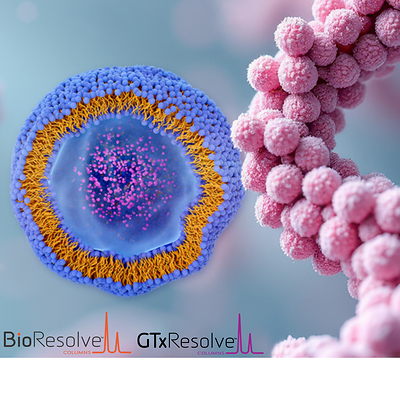

In GLP-1 receptor agonists and newer mRNA-based therapies such as in vivo CAR T, difficulty resolving impurities can delay time to market, weaken regulatory confidence, and affect patient safety. Traditional RP columns do not always separate low-level or closely related impurities well, often requiring longer analyses, detector-suppressing mobile-phase additives, or repeated method redevelopment. BioResolve Peptide and GTxResolve Lipid Columns help to overcome these limitations with ready-to-use methods that improve both resolution1,2 and speed2,3 while fitting into existing workflows.
"We have made simultaneous advances in both chemistry and particle physics to deliver the first columns Waters has introduced to market specifically QC batch-tested for GLP‑1 analysis4 and lipid nanoparticles,2 solving a longstanding customer pain point," said Erin Chambers, Vice President, General Manager, Consumables & Lab Automation, Waters Analytical Sciences, Waters Corporation. "BioResolve Peptide and GTxResolve Lipid Columns are designed to resolve chemically similar GLP‑1 impurities and LNP components faster when speed matters,2,3 and with extraordinary resolution1 when certainty is required. The result is simpler method development, regulatory‑ready data,5 and faster, highly reproducible methods, ultimately helping to reduce cost burdens on important new therapeutics."
BioResolve Peptide and GTxResolve Lipid Columns use specially designed surface chemistries and superficially porous particles to deliver precise RP separations with selectivity for two difficult sample types. Available in Phenyl-Hexyl+ and C18+ chemistries with 230 Å pore size particles, they are designed to support efficient mass transfer, consistent performance across U(H)PLC and HPLC systems, and reliable, batch-tested results5 from early-stage research through manufacturing.
GLP-1 peptides are especially challenging to analyze because many impurities differ by just one atom, while others have no difference in atomic composition and vary only in how their atoms are arranged spatially. BioResolve Peptide Phenyl-Hexyl+ and C18+ Columns are built to resolve these difficult impurities, with specialized 300 mm formats available when maximum separation performance and deeper impurity characterization are required.
"The BioResolve Peptide RP Columns have performed exceptionally well, showing outstanding resolution between our peptide therapeutics and related impurities," said Ashish Kanhed, Group Leader, Alembic Pharmaceuticals. "We are highly impressed with their quality and look forward to continuing to use them for our complex GLP-1 and peptide separations. By discriminating critical impurities at speed with a mass spectrometry-based QC approach, we can now satisfy present and future regulatory requirements in one run for faster, more confident answers on molecular purity."
For LNP and lipid workflows, the charged surface of GTxResolve Columns helps sharpen peaks for ionizable lipids by reducing tailing. Their larger pore size makes it easier for a wide range of lipid molecules to move through the column, improving peak shape and resolving challenging co-elutions. In addition, the superficially porous particle design speeds the movement of molecules through the stationary phase, shortening run times without reducing selectivity.2
"GTxResolve Lipid RP Columns have demonstrated strong performance for lipid quantitation and impurity analysis, with reduced run times and excellent peak shape," said Adam Kowalczyk, Research Scientist II, Analytical Development, Acuitas Therapeutics. "The ability to tune separations for specific lipid components, combined with compatibility across multiple detector platforms (UV, MS, ELSD, and CAD), provides significant flexibility for characterization of diverse lipid species. In particular, we have observed a separation of ionizable lipids that has not previously been achieved."
Waters' BioResolve Peptide and GTxResolve Lipid Columns will be available globally beginning June 9, 2026, starting with the 1.6 µm Phenyl-Hexyl+ phase. For more information, please visit waters.com/BioResolve and waters.com/GTx.
Additional Resources:
Waters, BioResolve, GTxResolve, and Empower are trademarks of Waters Corporation or its affiliates. All other trademarks are the property of their respective owners.
About Waters Corporation:
Waters Corporation (NYSE: WAT) is a global leader in life sciences and diagnostics, dedicated to accelerating the benefits of pioneering science through analytical technologies, informatics, and services. With a focus on regulated, high-volume testing environments, our innovative portfolio harnesses deep scientific expertise across chemistry, physics, and biology. We collaborate with customers around the world to advance the release of effective, high-quality medicines, ensure the safety of food and water, and drive better patient outcomes by detecting diseases earlier, managing routine infections, and combating antibiotic resistance. Through a shared culture of relentless innovation, our passionate team of approximately 16,000 colleagues turn scientific challenges into breakthroughs that improve lives worldwide. For more information, please visit www.waters.com/about.
References:
- As demonstrated on Waters Literature Code: 720009327EN "Supercharged Peptide Chromatography" when compared to a competitor superficially porous particle technology.
- As demonstrated on Waters Literature Code: 720009330EN "Lipid Nanoparticle Total Solution Analysis" when compared to fully porous particle technology.
- As demonstrated on Waters Literature Code: 720009327EN "Supercharged Peptide Chromatography" when compared to fully porous particle technology.
- QC batch testing approaches based on insulin, semaglutide, tirzepatide, cagrilintide, and liraglutide are highlighted in Waters Literature Code: 720009327EN "Supercharged Peptide Chromatography."
- Application note: "Automating Charged Aerosol Detection (CAD) Analysis with Empower™ CDS Using a Single-Vendor Integrated LC Platform."
Contact:
Molly Gluck
Head of External Communications
Waters Corporation
508.498.9732
molly_gluck@waters.com
 View original content to download multimedia:https://www.prnewswire.co.uk/news-releases/waters-launches-industry-first-reversed-phase-bioseparation-columns-to-deliver-up-to-3x-faster-glp-1-characterization-and-2x-faster-lnp-component-analysis-302793693.html