Shinsung Materials Strengthens Competitiveness in the Functional Cosmetics Market with Differentiated Ingredient Technologies
Localizing water-soluble UV filters and diversifying naturally derived oil gelling agents to meet growing global demand for clean beauty
SEOUL, South Korea, Aug. 27, 2026 /PRNewswire/ -- Shinsung Materials Co., Ltd. is a functional cosmetic ingredient company specializing in the development and production of high-purity preservatives, water-soluble UV filters, and premium oil gelling agents. Its preservative products include 1,2-Hexanediol, 1,2-Pentanediol, 1,2-Octanediol, and Ethylhexylglycerin, along with naturally derived preservative systems based on these ingredients, which are supplied reliably to customers. Leveraging its accumulated purification and manufacturing technologies, environmentally friendly processes, and continuous R&D efforts, the company is expanding its functional ingredient portfolio and strengthening its presence in domestic and global markets.
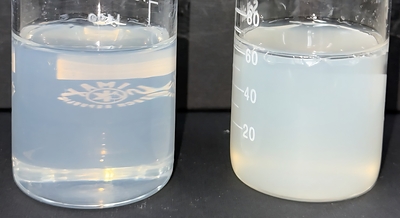
One area where its technological capabilities stand out is water-soluble UV filters. Shinsung Materials holds Korean Patent No. 10-1937332 for its high-purity purification technology for Ecamsule (Terephthalylidene Dicamphor Sulfonic Acid, TDSA), a powerful UV-A filtering ingredient. Based on this technology, the company has developed neutralization and powderization technologies that improve formulation compatibility and convenience in storage and transportation. By securing quality that meets USP 44 standards, Shinsung Materials is contributing to the localization of water-soluble UV filter ingredients and expanding their applications in cosmetic formulations.
Another core area is naturally derived oil gelling agents. Dextrin Palmitate and Stearoyl Inulin are used to control oil viscosity and improve formulation stability. Dextrin Palmitate can provide higher transparency and gel strength than conventional products on the market. Based on this technology, OG-DP11 is gaining interest in global markets and has obtained COSMOS approval, enabling Shinsung Materials to respond to growing clean beauty demand for naturally derived ingredients. Stearoyl Inulin is suited to increasing oil viscosity and pigment dispersion stability while forming firm, smooth gels.
Shinsung Materials is diversifying its oil gelling agent portfolio to meet the wide range of gel strengths and sensory profiles required by the market. In response to customer demand for a softer gel texture than OG-DP11, the company is developing a new Dextrin Palmitate product, OG-DP25. Dextrin Myristate (DM14), also under development, is designed to provide appropriate gel strength and a soft texture while maintaining high transparency. Dextrin Palmitate/Ethylhexanoate (DPE33) offers high transparency and gel strength with thixotropic properties. The company plans to further expand its oil gelling agent portfolio through the commercialization of DM14, DPE33, and OG-DP25, which are currently in R&D.
For more about Shinsung Materials
Homepage: http://www.ssmoled.com/
Youtube: https://www.youtube.com/watch?v=g78kYhik4YM
 View original content to download multimedia:https://www.prnewswire.co.uk/news-releases/shinsung-materials-strengthens-competitiveness-in-the-functional-cosmetics-market-with-differentiated-ingredient-technologies-302861172.html