ROBOTERA Raises Over USD 200 Million in New Round Led by SF Group, HSG and IDG Capital
BEIJING, May 8, 2026 /PRNewswire/ -- Following its RMB 1 billion strategic round in March, robotics company ROBOTERA has raised over USD 200 million in a new financing round led by SF Group. The round also saw participation from leading financial investors including HSG, IDG Capital, Hillhouse Investment, CICC Capital, Jingming Capital, SparkEdge Capital, Luxin Venture Capital Group, Unite Pioneers Capital, and Longqi Investment; alongside major industrial partners such as KENGIC, Dongfeng Asset Investment, ICBC Capital, and funds affiliated with China Unicom. Existing investors Tsinghua Holding Tiancheng Asset Management and Horizon Investment continued to increase their stakes. Investor demand significantly exceeded the initial fundraising target.
ROBOTERA now brings together top-tier financial institutions including CDH Venture and Growth Capital, HSG, IDG Capital, Hillhouse Investment, Gaocheng Capital and CICC Capital, alongside a broad base of industrial investors such as SF Group, Alibaba, Geely Capital, BAIC, Dongfeng Asset Investment, Lenovo, Haier, Golden Resources Group, Singtel Innov8, China Unicom-affiliated funds, Woori Venture Partners, a venture capital subsidiary of Woori Financial Holdings, ICBC Capital, KENGIC and a leading South Korean technology company. These partners contribute real-world deployment scenarios and commercial demand, supporting large-scale adoption.
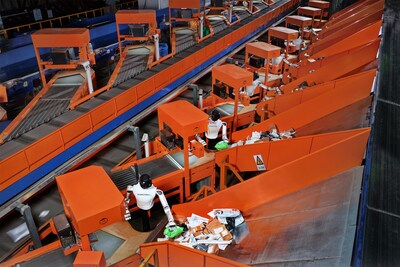
This strong backing reflects confidence in ROBOTERA's technology path and its ability to deliver productivity at scale. The company has achieved the first product-market fit (PMF) in the embodied intelligence sector, with deployments across more than ten logistics centers in collaboration with China Post and SF Group. In Q2 2026, ROBOTERA initiated thousand-unit deliveries, with growth exceeding 300%.
Beyond deployment, ROBOTERA has built a fully in-house robotics hardware system, with over 95% of core components developed internally, spanning actuation systems and humanoid platforms, forming a robust foundation for real-world mobility and manipulation tasks.
A key focus is its pioneering full direct-drive dexterous hand architecture, the first of its kind in the industry, enabling high-precision, adaptable, and durable manipulation in logistics and industrial environments. Its reliability has been validated through long-term real-world deployment.
ROBOTERA's hardware system has been adopted by leading global technology companies and research institutions, including Boston Dynamics, NVIDIA, and Apple. The system works in close coordination with software in real-world environments, with deployment feedback enabling continuous performance optimization.
With proven deployment in logistics and ongoing expansion into automotive, electronics, and service industries, ROBOTERA is entering a phase of rapid commercialization. The company will continue scaling real-world robotic applications across global markets.

Photo - https://mma.prnewswire.com/media/2975598/1.jpg
Logo - https://mma.prnewswire.com/media/2833507/RobotEra_Logo.jpg
 View original content:https://www.prnewswire.co.uk/news-releases/robotera-raises-over-usd-200-million-in-new-round-led-by-sf-group-hsg-and-idg-capital-302766758.html