Ping An Good Doctor CEO He Mingke Speaks At 2026 Summer Davos: China Is Entering Its Own "Longevity Era"
HONG KONG and SHANGHAI, June 24, 2026 /PRNewswire/ -- Ping An Insurance (Group) Company of China, Ltd. ("Ping An" or the "Group"; HKEX: 2318/82318; SSE: 601318) attended the World Economic Forum's 17th Annual Meeting of the New Champions, also known as Summer Davos 2026, convened at the Dalian International Conference Center on 23 June, 2026. This year's forum brought together more than 1,700 representatives from over 90 countries and regions to discuss cutting-edge topics related to global economy, technology, and social development. Among the key topics were ageing population and the sustainable development of a longevity society.
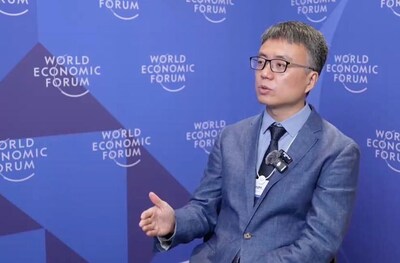
He Mingke, CEO of Ping An Healthcare and Technology Company Limited ("Ping An Good Doctor"; HKEX: 1833), the flagship of Ping An Group's health and senior care ecosystem, shared insights on Ping An's full-cycle health and longevity management solutions under its "integrated finance + health and senior care" strategy, with a focus on population aging and the sustainable development of a longevity society.
Ping An Good Doctor to Launch Health Longevity Index and Upgrade Longevity Management Services
"China is entering its own 'longevity era', and the focus of population health management is shifting from simply extending lifespan to extending healthy lifespan. The average life expectancy of Chinese residents is now close to 79 years, while healthy life expectancy remains below 69 years, leaving a health deficit of approximately 10 years. Traditional passive healthcare and post-incident claims settlement alone are no longer sufficient to meet the health needs arising from longevity. What is needed is more proactive health management, with earlier intervention to delay functional decline, reduce the risk of disability, and help more people maintain good health over a longer life course," said He Mingke, CEO of Ping An Healthcare and Technology Company Limited.
Based on this insight, Ping An Good Doctor will jointly release white paper titled Centenarian Health Standards: From Passive Healthcare to a Proactive Health Paradigm with the Asia-Pacific Longevity Medicine Society, and will take the lead in launching the "China Health Longevity Index (CHLI)". Ping An Good Doctor will also upgrade the "Ping An Longevity Management Service System", promoting the shift of health management from fragmented wellness practices to systematic management, and from "treating illness and providing elderly care" to "healthy aging".
Advancing the "Integrated Finance + Health and Senior Care" Strategy
In recent years, Ping An has continued to advance its "integrated finance + health and senior care" strategy, with the upgrade of the "Ping An Longevity Management Service System" serving as a key customer-centric initiative. It is designed to promote deeper synergy between financial protection and health and senior care services, transforming insurance policies into more frequent, heartwarming companionship and helping customers enjoy healthier, higher quality lives.
Since 2026, Ping An has launched a range of services, including AI-powered Express Service, which enables customers to "get things done with one sentence", its Global Emergency Assistance service, which enables customers to "respond to emergencies with one button", and "Ping An Home-based Services". These initiatives reflect Ping An's active response to customers' evolving needs in financial services, travel safety, health, and senior care. Looking ahead, the Group will continue to deepen its "integrated finance + health and senior care" strategy, further advance the "finance + services" model and product innovation, and bring greater wellbeing to more families through Ping An's services.
 View original content:https://www.prnewswire.co.uk/news-releases/ping-an-good-doctor-ceo-he-mingke-speaks-at-2026-summer-davos-china-is-entering-its-own-longevity-era-302809134.html