Philips OneBlade and Red Bull take self-expression to new heights in Cappadocia, Turkey
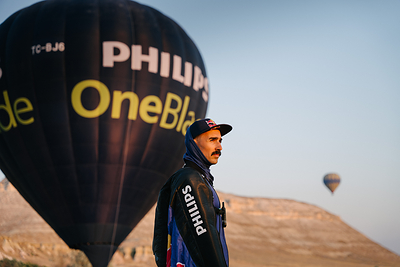
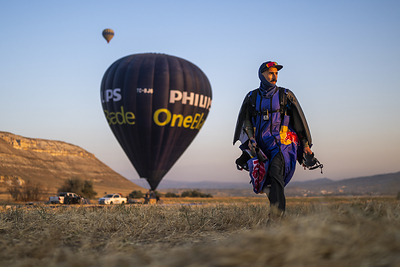
In a breathtaking display, Red Bull athlete Marco Waltenspiel and his distinctive moustache achieved a world's first in wingsuit hot-air balloon slalom, soaring between seven hot-air balloons at 200 km/h, to celebrate the freedom to be yourself and follow your passions.
AMSTERDAM, Sept. 15, 2026 /PRNewswire/ -- Royal Philips (NYSE: PHG) (AEX: PHIA), a global leader in health technology, has teamed up with Red Bull and athlete Marco Waltenspiel to complete an extraordinary wingsuit slalom against Cappadocia's famous balloon-filled skyline. It marks a new Philips OneBlade and Red Bull project, celebrating individuality, self-acceptance and doing things your own way.
Marco Waltenspiel is known for pushing the limits of wingsuit flying and doing so with his distinctive moustache and unmistakable look. Bringing his unique style to the aerial obstacle course, he jumped from 2,800 meters and turned the sky into a slalom trail through balloons at different heights, shaving seconds off each split-second decision as wind conditions changed around him. Reaching speeds of up to 200 km/h, his fellow Red Bull athlete Marco Fürst flew alongside him to capture the spectacle from the sky. (Watch here)
"At Philips OneBlade, we believe there is no 'right' way to show up. We want to give people the freedom to shape their look on their own terms and express every side of who they are. Marco's breathtaking feat in Cappadocia brings that spirit to life: bold, individual and unmistakably him. Through our partnership with Red Bull, we celebrate people who challenge convention, pursue what feels true to them and inspire others to do the same, "comments Shumit Mongha, OneBlade Business Leader.
Marco Waltenspiel, Red Bull athlete said on the Cappadocia jump: "For me, the small rituals really matter. They help me to feel grounded and prepare myself for each challenging jump. But beyond personal preparation, this jump was also about teamwork and trust. It was a challenge to bring everything together, and every detail had to align perfectly. I felt great on the day, & when the right moment finally came, we trusted each other, relied on our instincts, and soared through the sky. It was an incredible feeling."
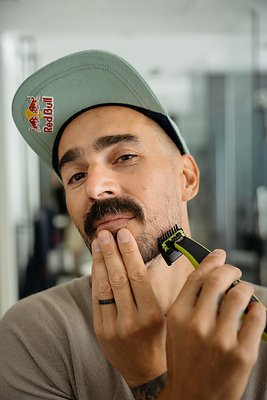
Philips OneBlade is made for people who want the freedom to create their own style. Whether trimming, edging or shaving, it offers a versatile way to shape and maintain facial hair, from a clean look to a statement moustache, and everything in between.
About Royal Philips
Royal Philips (NYSE: PHG) (AEX: PHIA) is a leading health technology company focused on improving people's health and well-being through meaningful innovation. Philips' patient- and people-centric innovation leverages advanced technology and deep clinical and consumer insights to deliver personal health solutions for consumers and professional health solutions for healthcare providers and their patients in the hospital and the home.
Headquartered in the Netherlands, the company is a leader in image-guided therapy, diagnostic imaging, ultrasound, monitoring, enterprise informatics and personal health. Philips generated 2025 sales of approximately EUR 18 billion and employs approximately 63,700 employees with sales and services in more than 100 countries. News about Philips can be found at www.philips.com/newscenter.
 View original content to download multimedia:https://www.prnewswire.co.uk/news-releases/philips-oneblade-and-red-bull-take-self-expression-to-new-heights-in-cappadocia-turkey-302876597.html