Formula E Title Battle Heads to London with Hankook iON Race
- The Season 12 (2025/26) Drivers' World Championship will be decided at Excel London, with Jake Dennis, Mitch Evans and Pascal Wehrlein separated by just five points at the top of the standings
- Formula E's 2.077-kilometre, 20-turn indoor-outdoor circuit combines contrasting surfaces, elevation changes and shifting light conditions within each lap
- As title partner of the event, Hankook will equip the entire grid with the iON Race and welcome fans at its Formula E Fan Village booth
LONDON, Aug. 14, 2026 /PRNewswire/ -- The ABB FIA Formula E World Championship returns to Excel London for the final two races of Season 12 (2025/26), with Hankook Tire & Technology Co., Ltd. (hereafter Hankook) supplying the entire grid at the 2026 Hankook London E-Prix on 15–16 August.
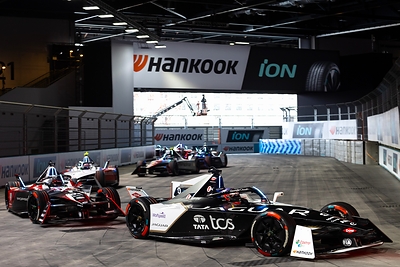
The Drivers' World Championship remains finely poised. Jake Dennis leads on 146 points, just two ahead of Mitch Evans and five clear of Pascal Wehrlein. The Teams' title will also be settled in London, with Jaguar TCS Racing holding a 14-point advantage over Porsche Formula E Team, while Porsche have already secured the Manufacturers' World Championship.
Excel London is unlike any other venue on the Formula E calendar. The 2.077-kilometre, 20-turn circuit runs through the exhibition halls at Royal Victoria Dock before moving outdoors, taking drivers from a smooth, lower-grip indoor surface onto asphalt. Changes in elevation and lighting further shape the rhythm of the short, technical lap.
With energy consumption relatively low, qualifying and track position are expected to carry added importance. The short out-lap also leaves teams with limited time to bring the tyres into their working range before a qualifying run. Across both races, teams will need to extract consistent performance from the Hankook iON Race as the cars repeatedly move between the circuit's contrasting surfaces and conditions.
"London brings several challenges together within a very short lap," said Manfred Sandbichler, Senior Director of Hankook Motorsport. "Drivers move between indoor and outdoor sections, different surfaces, changing light and elevation in quick succession. With the title fight so close, qualifying and track position will matter enormously. The iON Race was developed to perform consistently across these transitions, giving teams a stable platform on which to work throughout the weekend."
At the Formula E Hankook Fan Village booth, Hankook will showcase the winning design from its AI-powered helmet design campaign, 'Make it Yours, Make it Race,' bringing the fan-created concept to life at the season finale. Developed in collaboration with Formula E and DS PENSKE, the fan-created winning design will be produced as a full-scale racing helmet, while paper helmets featuring the artwork will be distributed to visitors throughout the weekend. Visitors will also be able to explore displays of Hankook's iON electric-vehicle tyre technology and product line-up.
Rounds 16 and 17 will begin at 15:05 local time on Saturday and Sunday. Broadcast details for each region are available on the 'How to Watch' page of the Formula E website.

 View original content to download multimedia:https://www.prnewswire.co.uk/news-releases/formula-e-title-battle-heads-to-london-with-hankook-ion-race-302851594.html