CANOPY INTERNATIONAL ACQUIRES AVIOTEC, STRENGTHENING SUPPORT FOR EUROPEAN SPACE AGENCIES AND COMMERCIAL CUSTOMERS
Acquisition adds funding, engineering, and R&D resources to Aviotec's Turin operations, which continue under existing leadership
AMSTERDAM and TURIN, Italy, Sept. 1, 2026 /PRNewswire/ -- Canopy International B.V. ("Canopy International"), the European platform of Canopy Aerospace & Defense ("Canopy A&D"), today announced the acquisition of Aviotec S.r.l. ("Aviotec"), a Turin-based supplier of multi-layer insulation (MLI) blankets and electrical harnesses for satellites and spacecraft, with in-house design, analysis, manufacturing, and integration capabilities serving institutional and commercial space programs across Europe.
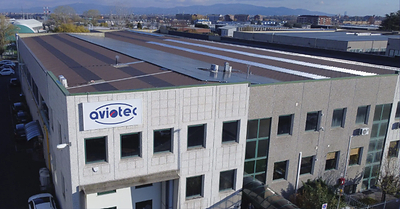
Canopy International is Canopy A&D's Amsterdam-based platform overseeing European operations and strategic growth. It is built to help European specialists grow, providing local leadership, customer interface, and design, development, and integration support, while giving each business access to shared engineering, R&D, and supply-chain resources. The acquisition adds funding, engineering knowledge, and manufacturing capacity to support Aviotec's continued growth, while its leadership, team, facility, design authority and customer relationships remain in place and managed locally.
Founded in 2008 and based in Turin, Aviotec has built more than 15 years of expertise in thermal-protection MLI blankets and high-reliability electrical harnesses, alongside satellite design and integration. Aviotec delivers flight-qualified solutions from design and analysis through manufacture, integration, and test, supporting institutional space programs and a growing base of commercial customers across Europe's space economy.
Raffaele Mozzillo, Managing Director of Canopy International, commented: "Aviotec has spent more than fifteen years earning the trust of Europe's space programs, and that track record is what brought us together. Their clean-room facility in Turin and their depth in thermal protection and harnessing strengthen our platform in exactly the area we needed. Aviotec now has the engineering, R&D, and supply-chain resources of a larger organization behind it."
Barbara Barresi, Amministratore Delegato of Aviotec, added: "Becoming part of Canopy International gives our team access to resources and technical depth we could not have built on our own. Our operations stay in Turin, under the same leadership, with the same people our customers already work with, now supported by a much larger platform. It is a natural next step for a company that has spent its history growing alongside Europe's space programs."
About Canopy International
Canopy International B.V., based in Amsterdam, is the European operating platform of Canopy Aerospace & Defense. It supports specialized aerospace and defense businesses in Europe by coordinating capital, technical resources, and operational capabilities while preserving local management and customer accountability. For customers and programs, its role is to provide continuity of local technical and commercial contact points while coordinating additional engineering, manufacturing, and supply-chain support when needed. Each portfolio company remains the primary interface for its customers, with Canopy International acting as a behind‑the‑scenes enabler.
About Aviotec
Aviotec, founded in 2008 and headquartered in Turin, Italy, designs and manufactures multi-layer insulation (MLI) blankets and electrical harnesses for satellites and spacecraft, and provides in-house satellite design and integration. Aviotec supports institutional space programs and a diversified base of commercial customers across the entire Space Economy.
About Canopy Aerospace & Defense
Canopy Aerospace & Defense is a leading provider of signal attenuating advanced materials for critical and complex structures in harsh & highly corrosive environments on air, land, sea, and space platforms. Combining world-class manufacturers, Canopy A&D is an international, vertically integrated platform with centers of excellence across advanced material R&D and design & engineering, production & assembly, and refurbishment & sustainment. With deep domain expertise and responsive manufacturing, Canopy A&D acts as a seamless "Built-In" extension of its partners, filling critical gaps across long manufacturing chains. European operations are independently managed through Canopy International B.V., based in Amsterdam, which partners with local European businesses, bringing support via shared engineering, R&D, and customer-support resources. The company operates facilities in Los Angeles, Denver, Cape Canaveral, the United Kingdom, and Italy.
Gaven Van Sant
Technical Marketing Lead
Canopy Aerospace & Defense
gaven.vansant@canopy-ad.com


 View original content to download multimedia:https://www.prnewswire.co.uk/news-releases/canopy-international-acquires-aviotec-strengthening-support-for-european-space-agencies-and-commercial-customers-302865706.html