Arctech Shines at Intersolar Europe 2026: Advancing Europe's Energy Transition with Innovative Solutions and Strategic Partnerships
MUNICH, July 1, 2026 /PRNewswire/ -- Arctech, a global leader in solar tracking and smart energy solutions, showcased its integrated technologies at Intersolar Europe 2026 in Munich. The company highlighted its "Tracker+" Ecosystem, engineered to support Europe's evolving energy transition.
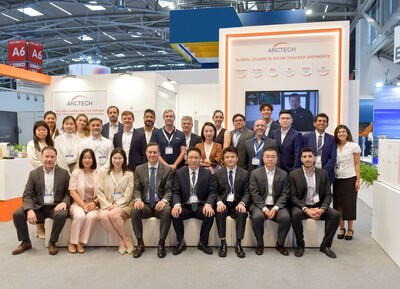
As Europe scales up its renewable energy deployment, solar projects are facing increasingly complex terrains, land constraints, and diversified application scenarios. In response, Arctech demonstrated how its integrated solutions deliver enhanced adaptability, efficiency, and lifecycle performance.
Purpose-Built Solutions for the European Market
To address Europe's mountainous terrains, high wind and snow-load regions, and variable weather patterns, Arctech's "Tracker+" Ecosystem offers tailored solutions for utility-scale and agrivoltaics applications. The featured portfolio includes:
SkyLine II: An all-terrain intelligent tracking system for complex landscapes, offering adaptability to mountainous and uneven terrain while supporting streamlined installation and long-term structural stability.
SkySmart II: An advanced 2P solar tracker featuring intelligent wind stow protection and AI-driven tracking optimization, enhancing system safety and energy yield.
Star Shine: An autonomous cleaning robot designed to optimize O&M performance and minimize soiling losses.
SkyFlex: A cable mounting system that improves installation efficiency while reducing structural stress.
Track Record in Europe
Arctech's solutions have been deployed across key European markets, including a 342 MW and a 67 MW project in Romania, a 266 MW project in Greece, and a 52 MW project in Poland, underscoring Arctech's adaptability to diverse terrains, complex regulatory environments, and rigorous climate conditions.
Expanding Global Collaboration
During the exhibition, Arctech announced new project signings totaling 132MW in Türkiye and Zambia, further extending its proven engineering capabilities into emerging markets.
European Innovation and Validation
The exhibition also highlighted Arctech Verification Base (AVB) in Puertollano, Spain. The AVB supports product performance under real-world European environmental conditions, driving continuous R&D innovation and localized engineering development.
"Europe is at a critical stage of its energy transition, where solar deployment is moving toward more complex terrains and diversified application scenarios," said Mr. Cai Hao, Chairman of Arctech. "Arctech is committed to supporting this transformation by delivering reliable, intelligent, and adaptable solar tracking and energy solutions that create long-term value for partners across the region."
About Arctech
For more information about Arctech, visit: https://en.arctechsolar.com/
Photo - https://mma.prnewswire.com/media/3002267/image1.jpg
Logo - https://mma.prnewswire.com/media/3003005/20260701175412_160_49_Logo.jpg
 View original content:https://www.prnewswire.co.uk/news-releases/arctech-shines-at-intersolar-europe-2026-advancing-europes-energy-transition-with-innovative-solutions-and-strategic-partnerships-302815973.html